
As businesses expand across geographies — be it in retail, F&B, healthcare, coworking, logistics, or even manufacturing assembly units — they face a critical question: How to finance the infrastructure for multiple new sites efficiently and sustainably? For forward-looking CFOs, the answer increasingly lies in structured operating leases. In this guide, we break down how CFOs can strategically structure lease programs for seamless, scalable rollout across multiple locations — without overburdening balance sheets or over-leveraging the company.
Why Traditional CapEx Funding Doesn’t Work for Multi-Site Expansion
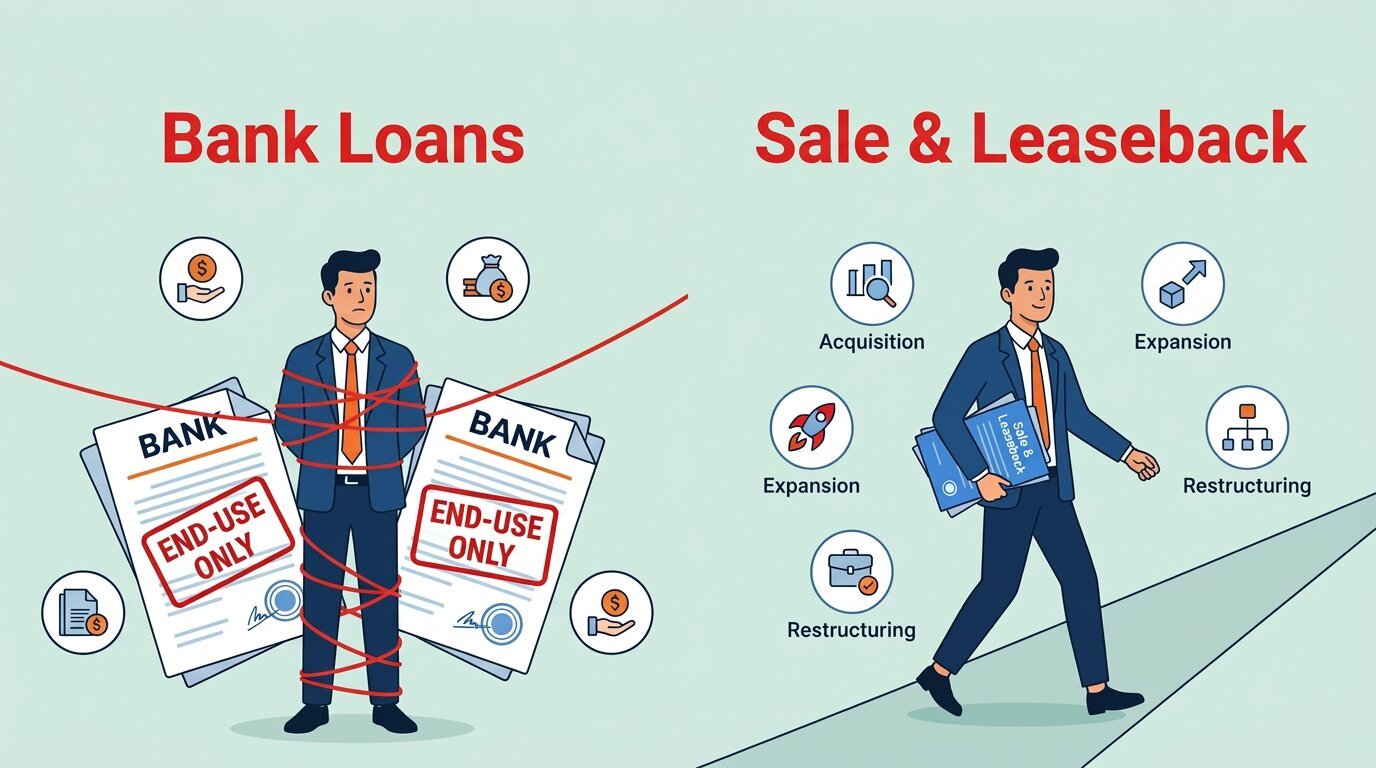
Traditional funding models (term loans or internal accruals) come with challenges:
– High upfront CapEx per unit rollout (e.g. fit-outs, interiors, technology, equipment).
– Balance sheet bloat — every new asset adds to gross block.
– Reduced debt capacity due to rising leverage and lower current ratios.
– Slower speed to market because of capital constraints.
For companies opening 10–100 locations annually, this model is not sustainable.
How Operating Lease Solves the Problem
An operating lease structure allows companies to:
– Convert CapEx into OpEx, avoiding upfront costs.
– Keep assets off balance sheet, preserving capital ratios.
– Reduce effective tax liability by deducting full lease rentals.
– Standardize rollout by defining per-location lease terms with vendors and financiers.
In short, leasing decouples expansion from balance sheet strain — allowing CFOs to scale faster without raising fresh equity or incurring new debt.
Key Elements of a Multi-Location Lease Structure
Here’s how CFOs can structure an efficient leasing framework for rollout:
- Standardized Bill of Quantities (BoQ):
– Pre-define asset categories per location (e.g., ₹35–50L per store for interiors, furniture, IT infra).
– Helps financiers estimate leasing value per location uniformly. - Master Lease Agreement (MLA):
– One umbrella agreement with annexures added per site.
– Avoids repeated legal work and speeds up documentation. - Digital Documentation Workflow:
– Use platforms like RFin to onboard new locations digitally.
– Upload invoices, store plans, vendor details for each rollout. - Vendor Integration:
– Finance flows directly from lessor to vendor.
– Ensures timely asset delivery and commissioning without financial leakage. - Staggered Disbursement with Central Credit Line:
– Single credit limit approved (e.g. ₹20–30 Cr).
– Funds released as per milestone, region, or project rollout plan.
Real-World Example
Take the case of Giva Jewellery, which used RFin’s Operating Lease to open 30+ new stores in one year, converting their ₹12 Cr CapEx into a lease line with an 11% IRR.
The structure involved:
– Per-location fitout leasing.
– Centralized approval and documentation.
– Zero balance sheet impact — preserving debt capacity for other growth needs.
Additional Advantages for Multi-Location Operators
– Improved ROA / ROCE: Since assets are not added to the balance sheet.
– Better cash flow visibility: Rentals are predictable and tax-deductible.
– Simplified financial modeling for new store P&Ls.
– Easier risk allocation: Maintenance and replacement stays with lessee.
What Capexo Offers
✅ End-to-end structuring support for retail, coworking, F&B, logistics, and healthcare brands.
✅ Upfront financing with top leasing NBFCs and banks.
✅ Digital rollout tracker for location-wise leasing progress.
✅ Sale and Lease Back option for existing CapEx in stores.
Conclusion
If you’re a CFO planning a rollout across 10, 50, or even 100+ locations — rethink your CapEx financing model. Operating Lease offers flexibility, tax-efficiency, and balance sheet health — empowering you to scale faster, more efficiently, and with strategic financial control.Explore how leasing can transform your rollout economics with RFinance.